
· 2 min read
Why the Best Outcomes from Clear Aligners Begin … and End with the Orthodontist
In the digital orthodontic era, no software or outsourced team can replace the orthodontist's own clinical judgment. Here's why the best clear aligner outcomes come from orthodontists who plan, design, and guide each case personally.
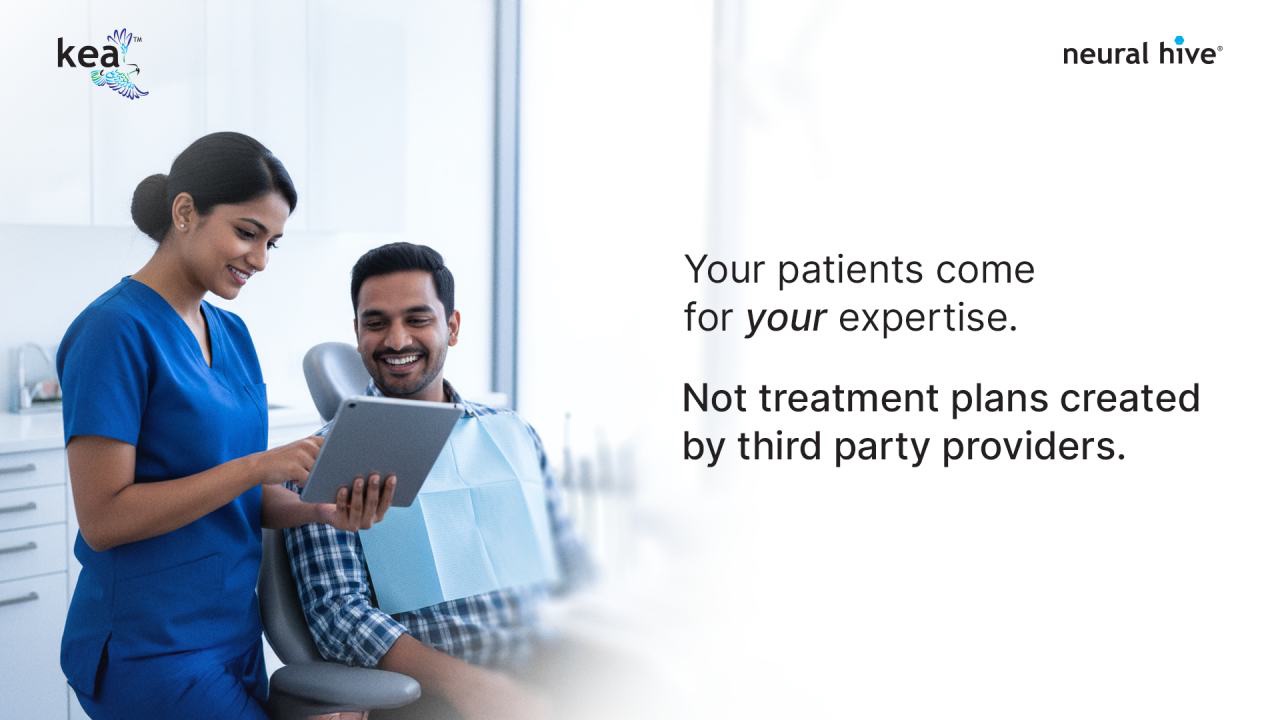
In today's digital orthodontic era, clear aligners have transformed from aesthetic convenience to clinical precision tools. Yet amid this evolution, one truth often gets overlooked: no software or outsourced team can replace the orthodontist's own clinical judgment.
The best results don't come from automation. They come from orthodontists who plan, design, and guide each case personally, from the first scan to the last refinement.
When the Plan Comes from You, Predictability Follows
Multiple global studies agree that clear aligner success depends far more on planning quality and movement design than on brand or material. Movements like torque, extrusion, and rotation still demand biomechanical understanding, not preset algorithms.
When orthodontists plan their own cases, they integrate variables a third party can't:
- Root morphology and periodontal response
- Attachments and staging aligned with biological limits
- Patient compliance patterns and review cycles
- Adjunctive procedures such as IPR, auxiliaries, or elastics
That's not just a plan, it's a clinical strategy tailored to one mouth, one biology, one behaviour.
Control Means Fewer Surprises, Smoother Journeys
Delegated plans often look perfect on screen, until they meet real-world biology. Small errors in staging or force design can compound, leading to refinements, patient frustration, and lost chair time.
When orthodontists personally design and monitor their own plans:
- Every movement is backed by intent and understanding
- Adjustments happen earlier, not after tracking fails
- Treatment time and refinements reduce significantly
- Patients feel cared for, not just processed
It's a return to clinical control, where precision meets accountability.
The True Signature of a Modern Orthodontist
Digital tools have made orthodontics faster, but your signature still defines the smile. Personalised planning doesn't mean rejecting technology, it means directing it.
An orthodontist-led plan ensures that every clear aligner, every attachment, and every refinement carries the logic of experience, not automation. That's what separates a technician from a specialist and an average result from a remarkable one.
In Essence
When you plan the case yourself:
- Predictability improves
- Refinements drop
- Patient trust deepens
- And every outcome carries your clinical fingerprint
Because clear aligners may be invisible… but the orthodontist's expertise should never be.
To explore how AI can simplify your workflow without taking away clinical control, read our previous article on the Neural Hive Ecosystem, and discover how KEA integrates intelligence with your orthodontic expertise.